
Dr. MaryAnn's Newsletter – Happy Harvest 2025 in Cockeysville MD

Happy Spring, Everyone! Hope you are now enjoying beautiful weather. Spring planting is my favorite time of year. This year I am growing potatoes in milk crates, lots of HERBS and Dahlias! I am making yogurt, sourdough bread, liver pate, and beet kvass on a regular basis. If you want to learn more, let me know. Give our Cockeysville MD chiropractic office a call to learn more.
Office News in Cockeysville MD
We have a new receptionist/Office Manager! (Barb had to move on to fulltime work). Her name is Monica Cruz. She is fluent in Spanish, has lots of medical background and is going to be helping launch something new for me: ZOOM meetings for my monthly FREE HEALTH classes. Please stop by to say hello. And to see Freedo with his new haircut. The next Free class (in-person AND available through ZOOM) is going to be on WEDNESDAY, APRIL 29th at 7PM. The topic, a very popular one, is on DIGESTION....all you need to know to feel better . Questions will be answered. Bonus****the first THREE people who sign up for the inperson class, will receive a free bottle of our best digestive enzyme product, ZYPAN. You will be muscle tested to see if it is indeed the right product for YOU! IF not, you will get fennel seeds (lol).
Here is the ZOOM link if you want to check it out. Just let me know you are interested and I will look for you.
Copy this link https://us06web.zoom.us/j/82890674822?pwd=sKmUby2VTNxAZaSF3BGpaTXN8nfXEL.1 or click here to access the Zoom link!
Passcode: 731494
***We have our INVERTABOD back in the office for those who like inversion machines or have tight low backs, who may need some brief decompression action. Try it in here now.
Dr MaryAnn

Headaches & Cervicogenic Pain

When the Pain in Your Head Starts in Your Neck
Most people reach for a bottle of ibuprofen when a headache hits. That works sometimes, but for a significant portion of headache suf ferers, the real source of the problem is not inside the skull at all. It is in the cervical spine, specifically the upper three vertebrae, which share nerve pathways with the trigeminal nerve that supplies sensation to much of the head and face.
This type of headache has a name: cervicogenic headache. It originates in the neck and refers pain upward into the head, often mimicking tension headaches or even migraines. Patients frequently describe a dull, one-sided ache that starts at the base of the skull and creeps forward toward the eye or temple. Neck stif fness and reduced range of motion are almost always present. Many patients have lived with these episodes for years without anyone examining the cervical spine as a possible source.
What the Research Shows
A randomized controlled trial published in Spine found that spinal manipulative therapy produced significantly greater improvement in cervicogenic headache frequency and intensity compared to a low-load exercise program alone.¹ The cervical joints, muscles, and soft tissues are in constant communication with the brain, and when that communication is disrupted by joint restriction or muscle tension, pain signals can travel in unexpected directions.
Chiropractors assess the cervical spine for segmental dysfunction, restricted joint movement, or biomechanical abnormalities. Adjustments to those segments restore normal motion, reduce nerve irritation, and interrupt the pain cycle. Many patients who have cycled through medications for years find meaningful relief once the mechanical component of their headaches is properly identified and addressed. The shift from managing symptoms to correcting the underlying cause is often what changes the long-term picture.
Core Stability & Low Back Health

The Real Job of the Core
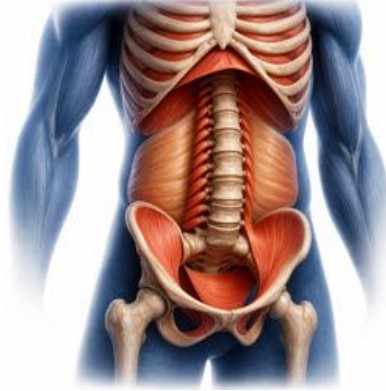
The word "core" gets used constantly in fitness culture, usually in reference to getting six-pack abs. But the core's actual job has nothing to do with aesthetics. It is a three-dimensional cylinder of muscle that wraps around the lumbar spine, including the deep stabilizers like the transversus abdominis, multifidus, pelvic floor, and diaphragm. These muscles fire before any arm or leg movement begins, bracing the spine in anticipation of load.
When that system breaks down, the lumbar spine absorbs stress it was never designed to handle alone. Discs compress unevenly, facet joints get overloaded, and the surrounding musculature tightens up to compensate. This is one of the most well-documented pathways to chronic low back pain. Left unaddressed, those compensation patterns tend to become selfreinforcing, making the problem harder to unwind over time.
Where Chiropractic Fits In
A chiropractor evaluating a patient with low back pain is not just looking at where it hurts. They are assessing spinal alignment, movement patterns, and whether joint restrictions are preventing the core stabilization system from engaging properly. A lumbar vertebra that is restricted or misaligned sends distorted feedback to the muscles that are supposed to support it. Those muscles then either underfire or overfire, creating instability or chronic tension.
Research published in the Journal of Manipulative and Physiological Therapeutics found that spinal manipulation combined with stabilization exercises produced greater long-term reductions in low back pain and disability than either approach used alone. 2 That combination makes mechanical sense: adjustments restore joint mobility and normalize neurological input, while targeted exercise rebuilds the muscular support the spine needs. Patients who understand this connection tend to engage more actively in their own recovery.
Building a Resilient Spine
Patients who address both components, spinal alignment and core function, tend to have fewer recurrences than those who focus on only one. A spine that moves well is a spine the nervous system can actually communicate with. Once that feedback loop is restored, the deep stabilizers can resume their job. Consistency matters here; sporadic care rarely produces the same lasting results as a structured plan that includes both adjustment and rehabilitation.
Low back pain is the leading cause of disability worldwide. Much of it is mechanical in origin, which means much of it is addressable without surgery or long-term medication.
Did you know?
1. The word "April" is believed to come from the Latin aperire, meaning "to open" — a nod to flowers and buds opening after winter.
2. Honeybees become significantly more active in spring, and a single hive can travel up to 55,000 miles collectively to produce just one pound of honey.
3. Tulips were once so valuable in 17th-century Holland that a single bulb could be traded for an entire house. Spring's most iconic flower sparked the world's first recorded economic bubble.
4. Frogs are one of the first animals to announce spring's arrival. Their chorus begins as soon as nighttime temperatures stay consistently above 50 degrees Fahrenheit
5. The Great Barrier Reef experiences its annual coral spawning event in spring, releasing billions of eggs and sperm simultaneously in one of nature's most spectacular mass events.
6. Daylight increases by roughly two minutes per day in spring in most of North America, adding up to nearly an hour of extra daylight over the course of the season.
Athletic Performance & Injury Prevention

Why Elite Athletes Use Chiropractic
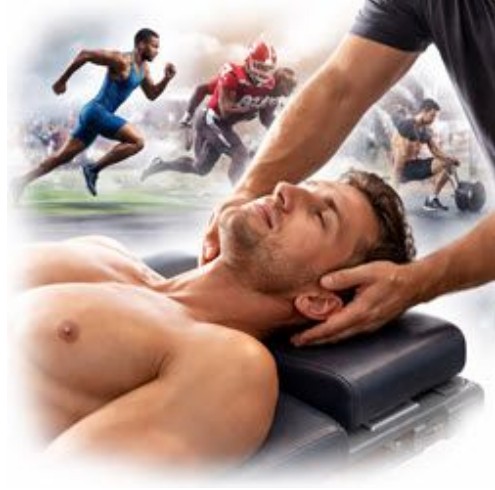
It is not a coincidence that virtually every professional sports team in North America has a chiropractor on staff. Athletes place extraordinary demands on the musculoskeletal system, and performance at the highest level requires more than strength and conditioning. It requires the nervous system to fire accurately, joints to move freely, and the body to recover efficiently between sessions. Chiropractic care directly supports all three.
Joint restrictions in the spine or extremities do not always cause pain, especially in well-conditioned athletes who have compensated for them. But those compensations come with a cost: altered movement patterns, reduced power output, and increased injury risk at the sites doing the extra work. Catching and correcting those restrictions early is far less costly than managing the injuries they eventually produce.
The Biomechanics of Better Performance
A pitcher with restricted thoracic rotation will recruit more aggressively from the shoulder and elbow to generate the same velocity. A runner with a restricted sacroiliac joint will shift load to the hip flexors or knee. These compensations are invisible until they produce an overuse injury, which often occurs months after the original restriction developed.
Chiropractic assessment identifies those restrictions before they cascade into injury. Research published in the Journal of Chiropractic Medicine demonstrated that athletes receiving regular chiropractic care showed measurable improvements in reaction time, agility, and proprioception compared to control groups.3 Proprioception, the body's sense of its own position in space, depends heavily on accurate signaling from spinal and joint mechanoreceptors. Adjustments stimulate those receptors, essentially recalibrating the system. For athletes whose split-second timing and spatial awareness matter, that recalibration can directly translate into better performance.
Recovery Is Part of Performance
Recovery is where adaptation happens, and anything that accelerates it gives an athlete a real edge. Chiropractic adjustments reduce joint inflammation, improve circulation to surrounding soft tissues, and lower the resting tension of muscles that have been working hard. Athletes often report that regular care allows them to train more consistently without the accumulation of stiffness and restriction that would otherwise force rest days.
Whether the patient is a weekend recreational runner or a professional competing at the highest level, the underlying principle holds: a body that moves well, recovers well. Investing in spinal health is not separate from athletic investment; it is a core part of it.
Spring's Most Energizing Essential Oils

Peppermint & Lemon: Spring's Most Energizing Essential Oils
Seasonal Reset in a Bottle
Spring has a way of making people want to open the windows, clear out the clutter, and feel more alive. Peppermint and lemon essential oils fit that energy perfectly. Both have been used for centuries for their refreshing, uplifting properties, and both have a growing body of research supporting their practical benefits. Used individually or blended together, they are among the most versatile oils available for everyday wellness.
Peppermint's primary active compound, menthol, is responsible for its signature cooling sensation and much of its therapeutic reputation. Lemon oil, cold-pressed from the rind, carries a bright citrus scent that has been shown to influence mood and mental clarity almost immediately upon inhalation.
What the Research Supports
A study published in the International Journal of Neuroscience found that inhaling peppermint oil significantly improved memory, alertness, and physical performance in healthy adults.4Spring is a natural time to shake off the mental fog that accumulates through winter, and peppermint offers a simple, drug-free way to support that shift.
Lemon oil has been studied for its anxiolytic properties, meaning its ability to reduce anxiety and elevate mood through the olfactory system's direct connection to the brain's limbic region. That same pathway influences stress hormone regulation, which makes aromatherapy more than just a pleasant experience; it is a legitimate input into the nervous system.
For those dealing with seasonal congestion as allergens ramp up in spring, peppermint's natural decongestant properties offer additional practical value. Diffusing it in a room or applying it diluted to the temples and chest can ease breathing and reduce sinus pressure without the drowsiness that often accompanies over-the-counter options.
Simple Ways to Use Them
Diffusing a blend of three drops of peppermint and three drops of lemon in the morning creates an energizing start that supports focus and lifts mood. Both oils can be added to an unscented carrier lotion and applied topically, though lemon oil should be avoided on skin exposed to direct sunlight due to its photosensitive nature.
Spring cleaning takes on a whole new meaning when these oils are added to homemade surface sprays. Both have natural antimicrobial properties, making them both functional and fragrant.
Gut Health & the Spine

A Connection Worth Paying Attention To
The Gut-Brain Axis Goes Both Ways
Most people think of digestion as a standalone system. Food goes in, nutrients come out, and the rest is plumbing. The reality is considerably more interesting. The gut and the brain are in constant two-way communication through the vagus nerve, a sprawling highway that runs from the brainstem down through the chest and abdomen. This connection, commonly called the gut-brain axis, means that what happens in the digestive system does not stay there.
Chronic gut inflammation, driven by poor diet, stress, or bacterial imbalance, sends distress signals through this network that affect pain sensitivity, mood, and even muscle tension throughout the body. Patients with chronic low back pain have been found to have distinct gut microbiome compositions compared with pain-free individuals, a finding that has shifted how researchers think about musculoskeletal health.
What Weston A. Price Understood Early
Long before microbiome research became mainstream, nutritional pioneer Weston A. Price documented the relationship between traditional whole-food diets and physical health across cultures worldwide. His research, compiled in Nutrition and Physical Degeneration, showed that populations eating nutrient-dense, minimally processed foods, including fermented foods, organ meats, and bone broths, maintained superior skeletal structure and far lower rates of degenerative disease. (5)
Price's observations align remarkably well with what modern research now confirms: a gut fed on refined, processed foods produces systemic inflammation that affects joints, muscles, and connective tissue. The spine, as the central structural pillar of the body, is not immune to that inflammatory environment. Disc health, facet joint integrity, and the surrounding soft tissue all depend on a nutritional foundation that supports rather than undermines them.
Feeding the Spine From the Inside Out
Rebuilding gut health does not require an extreme overhaul. Incorporating fermented foods like sauerkraut, kefir, and plain yogurt introduces beneficial bacteria that help regulate inflammation. Reducing refined sugar and seed oils removes two of the most significant dietary drivers of gut disruption. Bone broth, a staple in Price's research populations, provides collagen precursors that directly support spinal disc and joint tissue.
Chiropractic care addresses the spine structurally. Nutrition addresses it biochemically. Patients who attend to both tend to heal faster, hold their adjustments longer, and experience less chronic pain overall.
Words of Wisdom
- "A healthy outside starts from the inside." Robert Urich
- "Take care of your body. It's the only place you have to live." Jim Rohn
- "He who has health has hope, and he who has hope has everything." Arabian Proverb
- "In every walk with nature, one receives far more than he seeks." John Muir
Researching Chiropractic
Chiropractic clinical case histories have been a regular feature of our patient newsletter since its inception. There seems to be no limit to the health problems that respond positively to chiropractic care. How many people suffering, reliant on medication and drugs, and facing a life of limitation could be helped by chiropractic care?

Probably most of them.
Neck Pain & Spinal Manipulation: A study published in the Journal of Manipulative and Physiological Therapeutics (6) compared chiropractic care with medication for patients with acute and subacute neck pain. Researchers found that chiropractic patients reported faster and greater improvements in both pain levels and overall function, with spinal manipulation showing greater benefits than drug-based management. For patients looking for a non-pharmaceutical approach to neck pain, the evidence is solid.
Blood Pressure & the Atlas Vertebra: Published in the Journal of Human Hypertension (7), this study examined the effect of a single chiropractic adjustment to the Atlas vertebra, the topmost bone in the cervical spine, on blood pressure in patients with hypertension. The results were striking. Participants experienced a significant drop in blood pressure following the adjustment, an outcome that researchers compared to taking two blood pressure medications simultaneously. This highlights the significant impact that spinal alignment can have on bodily systems that extend far beyond just the muscles and bones.
Humor
1. What do you call a fish without eyes? A fsh.
2. Why did the bicycle fall over? Because it was two-tired.
3. What do you call cheese that isn't yours? Nacho cheese.
4. What do you call a sleeping dinosaur? A dino-snore.
5. Why did the math book look so sad? Because it had too many problems.
6. What do you call a pile of cats? A meow-ntain.
References
1. Nilsson N, Christensen HW, Hartvigsen J. "The effect of spinal manipulation in the treatment of cervicogenic headache." Spine. 1997;22(14):1647-1652.
2. Wilkey A, Gregory M, Byfield D, McCarthy PW. "A comparison between chiropractic management and pain clinic management for chronic low back pain in a National Health Service outpatient clinic. "Journal of Manipulative and Physiological Therapeutics. 2008;31(2):133-139.
3. Lauro A, Mouch B. "Chiropractic effects on athletic ability." Journal of Chiropractic Research and Clinical Investigation. 1991;6(4):84-87.
4. Moss M, Hewitt S, Moss L, Wesnes K. "Modulation of cognitive performance and mood by aromas of peppermint and ylang-ylang."International Journal of Neuroscience. 2008;118(1):59-77.
5. Price WA. Nutrition and Physical Degeneration. 8th ed. Price-Pottenger Nutrition Foundation; 2008.
6. Bronfort G, Evans R, Anderson AV, et al. "Spinal manipulation, medication, or home exercise with advice for acute and subacute neck pain." JMPT. 2012;35(1):3-15.
7. Bakris G, Dickholtz M, Meyer PM, et al. "Atlas vertebra realignment and achievement of arterial pressure goal." Journal of Human Hypertension. 2007;21:347-352.
OFFICE HOURS
Monday
9:00am - 1:00pm
3:00pm - 6:00pm
Tuesday
Closed
Wednesday
2:00pm - 7:00pm
Thursday
9:30am - 1:00pm
3:00pm - 7:00pm
Friday
Closed
Saturday & Sunday
Closed

Achieve Wellness Chiropractic and Nutrition Center
54 Scott Adam Rd Ste 106
Cockeysville, MD 21030